
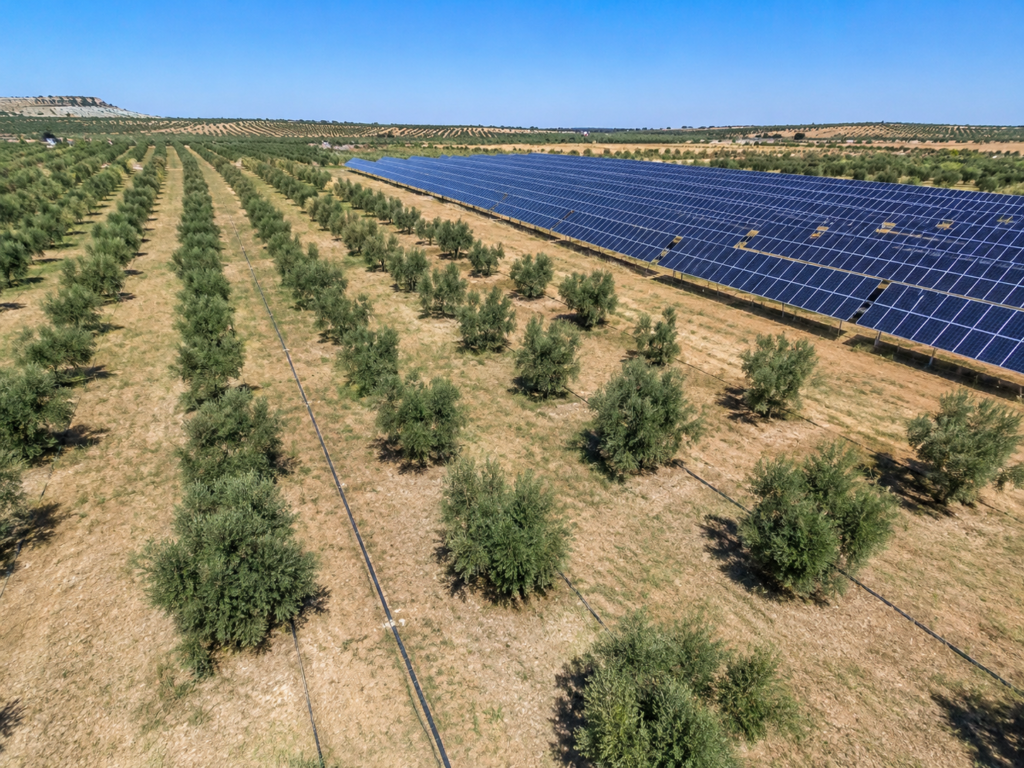
Over 5,000 solar-powered irrigation units have been installed across Tunisian farms, supported in part by a World Bank-backed Solar Irrigation Initiative that has helped bring solar panels to more than 1,500 farms specifically, cutting operational costs and improving efficiency.
Part of a broader renewable energy push
The rollout connects to Tunisia’s wider renewable energy targets, part of a national goal to reach 3.5 gigawatts of renewable generation by 2030. The REFAT project (Renewable Energies for Agricultural and Rural Development in Tunisia) has specifically supported solar irrigation dissemination for small-scale agriculture.
Why this matters for olive growers specifically
Given the water intensity of increasingly common irrigated olive cultivation, solar-powered systems offer real cost and emissions benefits for Tunisian producers navigating both energy costs and water stress.
FAQ
Does solar irrigation reduce water use, or just energy costs? Primarily energy costs — it doesn’t inherently reduce water use, so it works best alongside careful water management.
Is solar irrigation adoption growing quickly in Tunisia? Yes, with over 5,000 units installed and continued support from national and World Bank-backed initiatives driving further adoption.
Source: World Bank, Climate Chance, Fanack Water